

Private jets are becoming smarter as artificial intelligence (AI) moves into the cockpit. You might wonder if these luxury aircraft could one day fly themselves without a pilot.
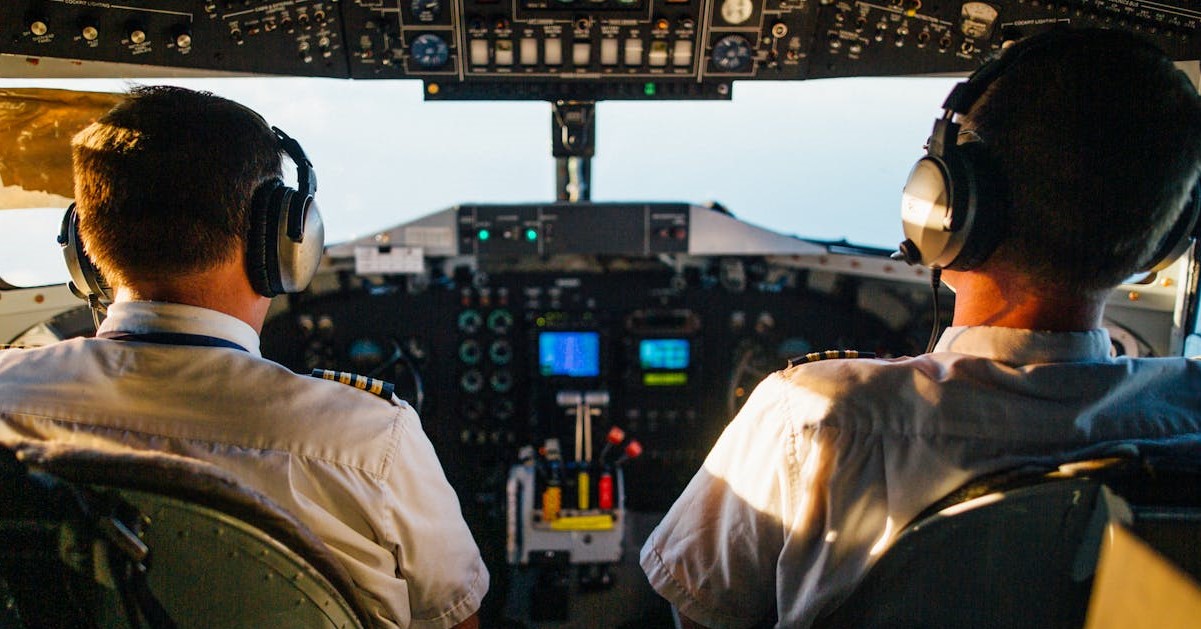
Private jets are already more advanced than many passengers realise. Modern cockpits use sophisticated avionics, autopilot systems, weather tools, flight management technology and real-time aircraft monitoring. Artificial intelligence is now adding another layer to that progress.
So, could you one day board a private jet with no pilot at the front?
The honest answer is yes, private jets may eventually become fully autonomous. But it is unlikely to happen quickly, and it is unlikely to happen before regulators, manufacturers, operators and passengers are completely confident in the technology.
For now, AI is not replacing pilots. It is supporting them. It can help with route planning, system monitoring, predictive maintenance, fuel efficiency and emergency decision-making. That means your future private jet charter may become smarter, safer and more efficient long before it becomes fully pilotless.
It is easy to assume that because aircraft already use autopilot, fully autonomous flight must be close. In reality, there is a big difference.
Automation means an aircraft can perform certain tasks once a pilot selects the correct settings. For example, it may hold altitude, follow a route, manage speed or support an approach. The pilot is still responsible for supervising the aircraft and making decisions.
Autonomy goes much further. A truly autonomous aircraft would need to understand the situation, make decisions, respond to unexpected problems and complete the journey safely without a pilot onboard.
That is a much higher standard.
When you arrange aircraft charter services, you are not just paying for an aircraft. You are relying on experienced flight planning, operator checks, crew coordination, safety oversight and route management. AI may help with many of those areas, but full autonomy would need to prove it can manage all of them reliably.
AI is already becoming useful in private aviation, but mostly behind the scenes. You may not notice it directly as a passenger, but it can affect the way flights are planned, maintained and managed.
In practical terms, AI can support:
For business jet charter, this could be especially useful. Business passengers often need punctual departures, efficient routing, privacy and flexibility. AI can help operators make faster decisions when schedules change or weather affects the original plan.
But the key point is this: AI is still mainly a support tool. The aircraft may be smarter, but the pilot remains central to safety.
Private aviation has always been built around flexibility. You choose the schedule, the airport, the route and the aircraft type where possible. That makes it a strong testing ground for smarter planning tools and more personalised flight management.
A private jet journey is often more tailored than a commercial flight. You may be flying for an urgent meeting, a family trip, a multi-city itinerary, a sporting event or a discreet transfer. AI can help process more information quickly so the charter team can match the aircraft and route to your needs.
For example, when arranging private aircraft charter rental, aircraft selection matters. Range, runway length, passenger numbers, luggage, cabin comfort and airport access all affect the final recommendation. AI can help compare those factors faster, but you still need human judgement to make sure the choice suits the real purpose of the trip.
That human layer matters. Luxury travel is not only about speed. It is also about confidence, comfort, privacy and service.
Future private jets will likely be designed with more advanced onboard systems. These may monitor the aircraft continuously and assist pilots in making better decisions.
This could include:
As these tools improve, different aircraft options may offer different levels of cockpit intelligence. Smaller jets may adopt certain safety systems first, while larger, longer-range aircraft may use advanced data tools to optimise complex international routes.
For passengers, this does not mean the flight will feel dramatically different. You may still arrive at a private terminal, board quickly, relax in the cabin and enjoy a tailored service. The biggest difference may be what happens in the background.
The aircraft may become better at spotting issues early, avoiding disruption and helping the crew make informed decisions.
Smaller aircraft are often discussed in conversations about autonomy because they can be simpler to operate than large intercontinental jets. Some emergency landing systems have already been developed for smaller aircraft, especially where a single pilot may need extra support.
This does not mean light jets will suddenly fly without pilots. It means certain safety technologies may appear in smaller aircraft before they become common across larger aircraft types.
A light jet used for short regional travel has a different operating profile from a long-range private jet crossing continents. The route may be shorter, the cabin smaller and the mission less complex. That can make some systems easier to test and introduce.
Even then, full autonomy is a major step. The aircraft would still need to handle air traffic control instructions, changing weather, technical faults, airport congestion and emergency decisions. These are not simple tasks.
For larger private aircraft, autonomy becomes more complex. Long-range flights may cross several countries, oceanic airspace and different regulatory zones. They may involve challenging weather, international permits, varied airport procedures and detailed passenger requirements.
That is why midsize jets, super midsize jets, large private jets and long range jets may adopt AI in stages.
The first stage is likely to be smarter assistance, not pilot replacement.
You may see more advanced systems helping with fuel calculations, navigation, predictive maintenance and rerouting. You may also see better passenger comfort controls, cabin connectivity and personalised onboard settings.
But removing pilots from these aircraft would require far more than impressive technology. It would require years of testing, certification and public trust.
Many people assume the only question is whether AI can fly the aircraft. That is only one part of the issue.
A fully autonomous private jet would also need to prove it can:
Aviation is rightly cautious. New systems are not accepted simply because they work in a demonstration. They need to be tested repeatedly, certified properly and trusted in real-world conditions.
That is why full autonomy will be gradual. You are more likely to see AI copilots, advanced safety systems and remote support tools before you see a private jet with no pilot at all.
Get a live quote instantly by clicking the ‘Get Live Quote’ button and filling out the form. Our representative will contact you to discuss your aircraft charter needs.
It is possible that cargo aircraft may move towards autonomy before passenger private jets. There is a simple reason for this: passengers need a much higher level of trust and reassurance.
For air freight and cargo charter, the priority is moving goods safely, quickly and efficiently. If autonomous systems are first approved in controlled cargo operations, the aviation industry can learn from those flights before applying similar ideas to passenger travel.
This does not mean cargo aviation is less important. It simply has a different risk profile from carrying people.
Private aviation is personal. You are boarding the aircraft yourself, often with family, colleagues or clients. Even if the technology becomes capable, many passengers may still prefer knowing that experienced pilots are onboard.
Trust will be just as important as engineering.
The most useful near-term role for AI is safety support. AI can help pilots and operators identify problems earlier and respond faster.
Predictive maintenance is a strong example. Instead of waiting for a part to fail or relying only on fixed maintenance intervals, intelligent systems can analyse aircraft data and highlight potential concerns. This can reduce disruption and help keep aircraft ready for service.
AI can also support emergency planning. In a medical scenario, for example, speed and coordination are vital. While a medevac air ambulance still depends on trained aviation and medical teams, smarter planning tools can help compare airports, aircraft availability and route options quickly.
In normal private travel, AI may also help crews avoid turbulence, plan smoother descents and respond to operational changes with better information.
That is where the technology feels most valuable today. Not as a replacement for pilots, but as another safety layer.
If private jets become more autonomous over time, the passenger experience could become more seamless.
You may see more accurate departure planning, better delay prediction and smoother route changes. Cabin systems may learn your preferred lighting, temperature, seating setup and catering notes. Ground transfers could be coordinated more intelligently with your flight arrival time.
For certain trips, AI may also help compare whether a jet, helicopter or smaller aircraft is most practical. For example, helicopter charter can be useful for short point-to-point transfers, while air taxi services may suit shorter regional journeys where speed and convenience matter.
The future may not be one single autonomous aircraft type. It may be a connected travel system where aircraft, ground teams, booking tools and passenger services work together more intelligently.
That could make private aviation feel even more personal.
Yes, AI could help make private aviation more efficient. That does not only mean lower operating costs. It may also mean better use of aircraft, less wasted positioning time and more accurate matching between aircraft and passenger needs.
For example, private jet empty leg flights already make use of aircraft that need to reposition. Smarter systems could make these opportunities easier to identify and match with flexible passengers.
AI may also support more efficient fleet planning. If an aircraft is due to finish one trip in one city, intelligent scheduling can help identify the most practical next journey. This could reduce wasted time and improve availability.
However, private aviation will always involve variables. Weather changes. Passengers adjust plans. Airports become busy. Aircraft availability shifts. AI can help manage those moving parts, but human charter specialists still play an important role in making practical decisions.
Autonomy is not only relevant to small private jets. It may also influence larger charter operations in the future.
For group air charter flights, planning can be more complex. You may have many passengers, luggage requirements, event timings, transfers, catering, security needs and destination logistics.
AI could make this easier by helping coordinate schedules, passenger data, aircraft capacity and airport handling requirements. It could also support disruption planning if a route changes or an aircraft needs replacing.
But again, this is not the same as a pilotless aircraft. In group travel, the human service layer is especially important. Passengers need clear communication, reliable planning and someone accountable when plans change.
AI can assist, but it should not make the experience feel less personal.
The aviation industry does not move at the pace of consumer technology, and that is a good thing. You may update your phone overnight, but aircraft systems need far more scrutiny.
For autonomous private jets to become normal, regulators would need clear rules around certification, liability, pilot requirements, remote monitoring, cybersecurity and emergency procedures.
Operators would also need to prove that autonomous systems can handle rare but serious events. These are often the hardest scenarios to test, because they do not happen often but matter enormously when they do.
Until those questions are answered, full autonomy will remain a future possibility rather than a current private jet reality.
You may see aircraft become increasingly smart over the next decade. But completely removing pilots from premium passenger aviation is likely to take much longer.
Technology is only half the story. Passenger confidence matters.
Some travellers may welcome autonomous aircraft if the safety case is strong. Others may feel uncomfortable boarding a private jet without pilots, even if the system has been certified.
That is understandable. Private aviation is built on trust. You want to know who is operating the aircraft, how it is maintained, what happens if plans change and who is responsible for your journey.
This is why full autonomy may arrive slowly. The industry may first introduce AI as a visible support tool. Over time, as passengers become used to advanced safety systems, confidence may grow.
But for many private jet passengers, pilots are not just part of the aircraft. They are part of the reassurance.
Fully autonomous private jets are possible, but they are not around the corner.
The more realistic future is gradual. AI will support pilots first. It will help operators plan better flights, maintain aircraft more efficiently and improve passenger service. Emergency automation will continue to develop. Cockpit systems will become more capable. Over time, some operations may move towards reduced crew or remote monitoring.
But for private passenger flights, full autonomy will need to meet the highest safety standards and win public trust.
For now, the future of private aviation is not about removing the human touch. It is about combining intelligent technology with experienced aviation professionals.
That balance is what will matter most.
Whether the future cockpit is more automated or eventually autonomous, your priority today is simple. You want a safe, comfortable and well-managed journey that fits your schedule.
Aircraft Charter can help you compare suitable aircraft, routes and destinations based on your trip requirements. Whether you need a business flight, family journey, group charter, urgent medical movement or specialist aircraft solution, the team can help arrange a tailored service from enquiry to arrival.
To discuss your next flight, contact Aircraft Charter and request a bespoke quote for your journey.
Experience seamless travel with aircraft charter. Start with bespoke charters, enjoy exclusive private jet charter, business air travel, plan group private jet charters, or rely on freight aircraft charter services.
Save big with empty leg private jet flights. Find a flight, book quick air taxi services, secure helicopter charter services, explore exclusive destinations, or rely on air medevac services.
Day 1: Arrival in the Host City
Fly into the Wrestlepalooza host city—whether it’s Las Vegas, Dallas, or Miami—aboard your private jet and land at the nearest executive airport for seamless arrival. A luxury SUV will take you straight to your premium suite at the Wynn, The Joule, or Faena Hotel Miami Beach, depending on the location. Spend the afternoon relaxing at the spa or poolside cabana. As night falls, dine like a champ at STK, Nobu, or Bazaar by José Andrés before an evening of cocktails at an exclusive rooftop bar.
Day 2: Wrestlepalooza Main Event
Fuel up with a gourmet breakfast before heading to the arena in your chauffeured vehicle. With ringside VIP access and backstage passes, experience the action up close—pyrotechnics, body slams, and larger-than-life entrances. Enjoy pre-show hospitality with premium food and drinks, and possibly a meet-and-greet with WWE Superstars. After the show, attend an exclusive afterparty with fellow high-rollers and wrestling legends.
Day 3: Recover & Explore
After the high-octane excitement, take it easy with a private wellness session or personal training in your hotel’s spa. For entertainment, opt for a private helicopter tour over the city, shopping at luxury boutiques, or a round of golf at a top-tier course. Cap off the day with a private dinner and maybe a cigar lounge experience fit for a champion.
Day 4: Departure
Enjoy a final relaxed morning before your chauffeur escorts you to your waiting jet. Leave with championship memories and VIP bragging rights.
