
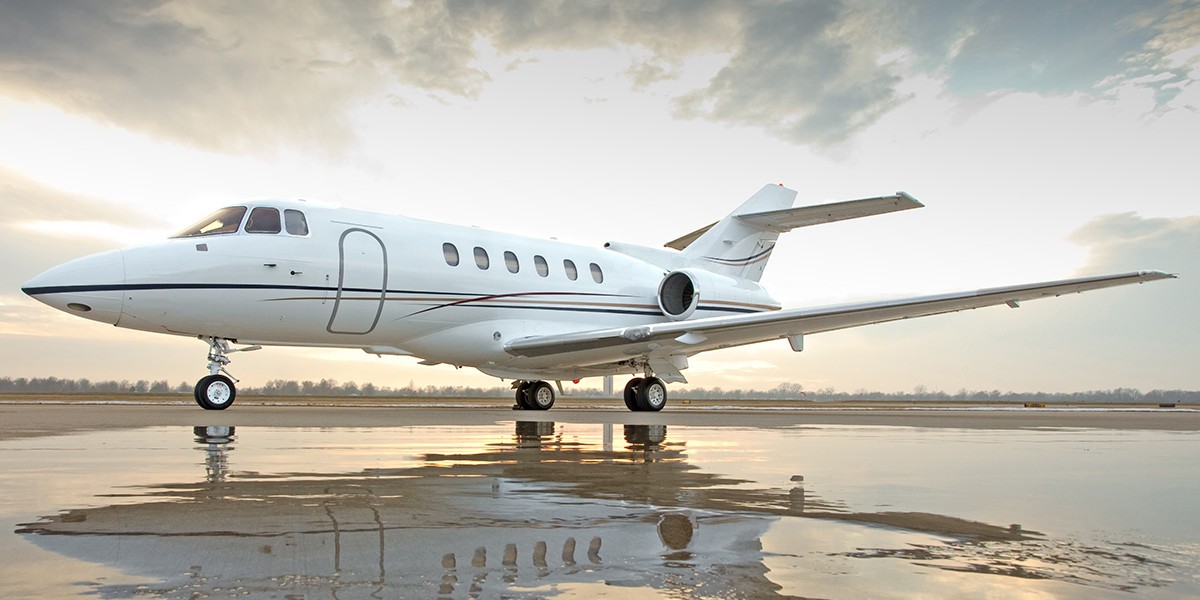
Private jet charter pricing can feel confusing until you break it into the same building blocks brokers and operators use to quote a trip. Once you know what goes into the number, you can budget with a lot more confidence, compare options fairly, and avoid surprises when the final itinerary is confirmed.
This guide walks you through a practical, line-by-line budget for a typical charter—what you’ll pay for, why you’ll pay it, and how to control the total.
Start with the “all-in” idea: what you’re really budgeting for
When you charter a private jet, you’re not just buying seat miles. You’re paying for an aircraft (and the crew) to be dedicated to your schedule.
A useful way to think about your budget is:
Total trip budget = billable flight time + positioning + airport fees + crew/overnights + taxes + optional services + contingency
Aircraft Charter’s own cost guide puts typical private jet charter pricing in a broad range of roughly $2,600 to $14,000 per billable flight hour, depending on aircraft category, with VIP airliners higher. That range is a helpful starting point—but your specific route, timing, and aircraft availability are what determines the real number.
1) The biggest line item: billable flight time (and what “billable” means)
Air time vs billable time
You’ll often hear “hourly rate,” but charter is usually priced on billable flight hours, which can include more than just the time you’re in the air.
Your billable time may include:
- Your trip’s air time
- Taxi time (varies by airport)
- Repositioning (positioning) legs (getting the aircraft to you and/or returning it after drop-off)
- Minimums (many aircraft/markets have a minimum billable time per day or per trip)
Aircraft Charter notes that billable flight time can include air time plus repositioning and minimum standards.
Typical hourly ranges by aircraft size
Every market is different, but as a planning framework, Aircraft Charter’s guide uses ranges like:
- Very Light Jets: about $2,600–$3,500/hr
- Light/Midsize Jets: about $4,000–$8,000/hr
- Heavy/Ultra Long Range: often around $11,000/hr (and can go higher depending on aircraft and route)
If you want to sanity-check aircraft-by-aircraft differences, it helps to compare categories side-by-side before you fall in love with a cabin that’s more jet than you need—see Comparing the cost of private jet charter by aircraft type.
2) Positioning fees: the “hidden” cost that isn’t really hidden
What positioning is
Unless a jet is already sitting at your departure airport, the operator has to fly it to you. That’s a positioning leg (sometimes called repositioning or ferry time). After your trip, it may also need to reposition again.
This is why 2 trips of the same distance can price very differently:
- Trip A: aircraft is already nearby → less positioning
- Trip B: aircraft is 700 miles away → more positioning
How to budget for it
When you’re budgeting early, assume:
- 1 extra hour of positioning for common city pairs with strong aircraft availability
- 2+ extra hours if you’re departing from a smaller airport, traveling peak days, or requesting a very specific aircraft
A key budgeting move is to be flexible on:
- Departure airport (a nearby alternate can reduce repositioning)
- Departure time window (lets the broker match a closer aircraft)
- Aircraft model (same cabin category, different availability)
If you want to explore flexibility-driven savings, read Empty leg private jet flights.
3) Airport and handling fees: small individually, meaningful together
These can vary widely by airport and aircraft category, but they usually show up as separate line items on a quote. Common examples include:
- Landing fees: charged by many airports based on aircraft weight
- Ramp/handling fees: for servicing the aircraft on the ground (marshalling, lav service, GPU use, etc.)
- FBO fees: private terminal facility charges (often bundled into handling)
- Parking/hangar: if the aircraft stays on the ground for hours or overnight (hangar demand is highly seasonal in some regions)
For budgeting, a simple rule of thumb is:
- A short domestic trip may include hundreds in combined fees
- A longer trip with extended stays can push those fees into the low thousands
You’ll typically see these transparently listed when you request an itinerary—Aircraft Charter emphasizes clear quotes showing flight time, positioning, landing/handling, and taxes.
4) Crew and overnight costs: when your itinerary makes the jet “wait”
If you fly out, stay, and fly back the next day (or later), the aircraft and crew are committed to you during that period. This can add costs such as:
- Crew overnight (hotels + per diem): especially common on multi-day trips
- Crew duty-time constraints: which can require additional crew on longer days
- Aircraft parking/hangar overnight: depends on airport and weather
How to reduce this line item:
- If schedule allows, consider a one-way + one-way approach instead of holding the same aircraft (your broker can price both ways)
- Use multi-city routing strategically (sometimes it’s cheaper than “out-and-back with waiting”)
If you’re planning corporate travel or roadshows, Business aircraft charter is a useful reference point for how these itineraries are often structured.
5) Fuel-related adjustments: why the same route can fluctuate
In some quotes, fuel is effectively baked into the hourly rate. In others, you may see:
- Fuel surcharge (especially when market prices are volatile)
- Long taxi / ATC delay impacts (more common at congested hubs)
For budgeting:
- Build a small buffer (2%–5%) if you’re traveling through congested airspace or during weather-heavy seasons.
6) Taxes in the US: don’t forget FET and segment fees
If you’re budgeting charters that qualify as taxable air transportation, federal excise taxes can materially change your total.
The 7.5% Federal Excise Tax (FET)
A 7.5% tax applies to amounts paid for certain taxable air transportation. This percentage has been longstanding and is commonly referenced in industry guidance.
Domestic segment fee (per passenger, per segment)
On top of the percentage tax, there is typically a per-passenger domestic segment fee, and the rate changes over time with inflation adjustments.
For calendar year 2026, the domestic segment fee is referenced as $5.30 per passenger per segment in industry reporting tied to IRS guidance.
Budget tip: On a simple nonstop, this fee is minor. On an itinerary with stops (or multiple legs in one day), the segment fees add up—especially with a larger passenger count.
Because tax applicability depends on trip structure and operator arrangements, treat early budgeting as an estimate and rely on your quote for the exact tax lines.
7) Optional services and “experience” upgrades (the stuff you control)
This is the part of the budget you can usually scale up or down without changing the aircraft.
Common add-ons include:
- Custom catering: from simple snacks to premium meals
- Ground transportation: black car/SUV transfers, meet-and-greet
- In-flight Wi-Fi: sometimes included, sometimes billed
- Concierge services: hotel coordination, special requests
Aircraft Charter’s cost guide gives example ranges such as $230–$2,000 per leg for catering and $180–$1,000 per leg for ground transport, depending on what you choose.
If you’re traveling with pets, that planning becomes part comfort, part logistics—see Pet friendly private jet.
8) International and special-mission costs (if your trip goes beyond “domestic A-to-B”)
If you’re flying internationally, or your trip involves special requirements, you may see additional items like:
- Overflight and landing permits
- International handling and airport fees
- Customs/immigration coordination
- Slots (at capacity-controlled airports)
- De-icing (seasonal, can be significant in winter regions)
If you’re planning long-haul, looking at the right category early matters—start with Long-range jets so you’re not budgeting a light jet for a mission it can’t comfortably fly.
9) How to build your budget in 10 minutes (a practical step-by-step)
Here’s a simple planning workflow you can use before you even request a quote.
Step 1: Define your mission clearly
Write down:
- City pair(s)
- Date(s) and time windows
- Passenger count
- Luggage needs
- Any must-haves (pets, Wi-Fi, specific cabin size)
This helps your broker match the “right jet for the mission,” which is central to cost control.
You can also read How to choose the right private jet for your journey for a practical sizing approach.
Step 2: Pick a likely aircraft category
As a starting point:
- Short hops, 2–6 passengers: often Light Jets
- Longer domestic or coast-to-coast: often Super-midsize or Heavy
- International: typically Long-range
Step 3: Estimate flight time (roughly)
Use approximate gate-to-gate estimates (your broker will refine):
- Short regional: 1–2.5 hours
- Transcon (e.g., LA–NYC): often ~5–6 hours
Step 4: Add positioning buffer
Add 1–2 hours as a planning assumption unless you know your market has abundant nearby aircraft.
Step 5: Add a fees + taxes allowance
For an early budget estimate:
- Add $1,000–$3,000 for common domestic airport/handling and incidentals (varies by airport and aircraft)
- Add taxes (including the 7.5% FET plus applicable per-segment fees) as a rough percentage and refine later
Step 6: Add optional services
Decide if you want:
- Basic catering vs custom
- Ground transport on 1 or both ends
- Wi-Fi requirements
Step 7: Add contingency
Build 5%–10% contingency if your schedule is tight, your airports are constrained, or you’re traveling in peak season.
10) Example budgets (so you can see the math)
These are illustrative planning examples to help you budget. Your actual quote will reflect real aircraft availability, exact routing, and fees.
Example A: Northeast day trip (Light Jet)
- Mission: NYC area → DC area → NYC area (same day)
- Estimated air time: ~1 hour each way
- Billable time: 2.0 hours air + 1.0 hour positioning/minimums = 3.0 billable hours
- Assumed hourly: $5,500/hr (light jet midpoint range)
- Subtotal flight time: 3.0 × $5,500 = $16,500
- Airport/handling estimate: $1,500
- Taxes estimate (rough): 7.5% FET on taxable amounts + segment fees
Planning budget: roughly $19,000–$22,000 depending on tax/fees and positioning
Example B: One-way LA → NYC (Super-midsize or Heavy)
- Estimated air time: 5.5 hours
- Billable time: 5.5 + 1.0 positioning = 6.5 billable hours
- Assumed hourly: $9,500/hr (varies widely by aircraft)
- Subtotal flight time: 6.5 × $9,500 = $61,750
- Fees/handling: $2,500–$5,000
- Taxes: 7.5% FET + segment fees
Planning budget: roughly $70,000–$80,000+ depending on category, timing, and availability
Example C: Multi-city with an overnight (cost driver: “waiting”)
- Mission: Chicago → Dallas (meeting) → Houston (overnight) → Chicago next day
Here, your cost can jump if you keep the same aircraft and crew staged overnight.
Your broker can price:
- A single aircraft held across the itinerary vs
- Separate legs (1-way + 1-way + 1-way) depending on availability and positioning efficiency
If you do group or event travel, Group aircraft charter often explains these logistics well because larger itineraries magnify the “hold vs swap” decision.
11) How to lower your charter budget without sacrificing the experience
If you want the biggest savings with the least pain, focus on these levers:
Be flexible on airports
A nearby alternate airport can reduce:
- congestion delays
- handling fees
- repositioning time
Travel midweek or off-peak
Pricing often rises around holidays and major events. Aircraft Charter notes timing can significantly influence rates.
Consider empty legs (when your schedule allows)
Empty legs can offer major discounts, but you trade flexibility because the route and timing are driven by the aircraft’s existing schedule. Aircraft Charter notes savings can be substantial—sometimes up to 75% in the right situations.
Right-size the aircraft
It’s tempting to “move up” a cabin class for comfort—but if your route is short, you may be paying for the range and cabin you won’t use. Use a category comparison: A guide to private jet charter costs
Use a broker who can compare the market
A good broker is doing more than sending a single operator request—they’re comparing availability, positioning, and price across a broad network. If you want a quick overview of why that matters, read Why use an aircraft charter broker? 7 key benefits.
12) A quick note on how charter is arranged (and why it matters for budgeting)
Aircraft Charter clearly states it is not a direct air carrier and does not operate aircraft; it arranges flights operated by appropriately certificated carriers who maintain operational control.
For your budget, that matters because it explains why:
- pricing is availability-driven (like a dynamic market)
- positioning can change depending on which aircraft is sourced
- the quote is built from real operator costs plus the trip’s required logistics
Budget checklist you can use before requesting a quote
Before you reach out, have these ready:
- Dates + preferred departure windows
- Passenger count + luggage
- Desired cabin category (or comfort requirement)
- Must-haves (Wi-Fi, pets, catering style)
- Flexibility notes (airports, timing, aircraft preferences)
- Whether you want one-way, round-trip, or multi-city
- Your target budget range (helps your broker propose smart options)
For fast, transparent options, start with Private jet rental or browse Aircraft charter services to see the different trip types you can price.
Next steps
If you want a precise budget for your exact route (with positioning, airport fees, and taxes clearly shown), request a live quote with Aircraft Charter. Start with your itinerary and passenger count, and you’ll get tailored options that match the right aircraft to your mission—without guessing. Use the Instant Quote page to get started.