
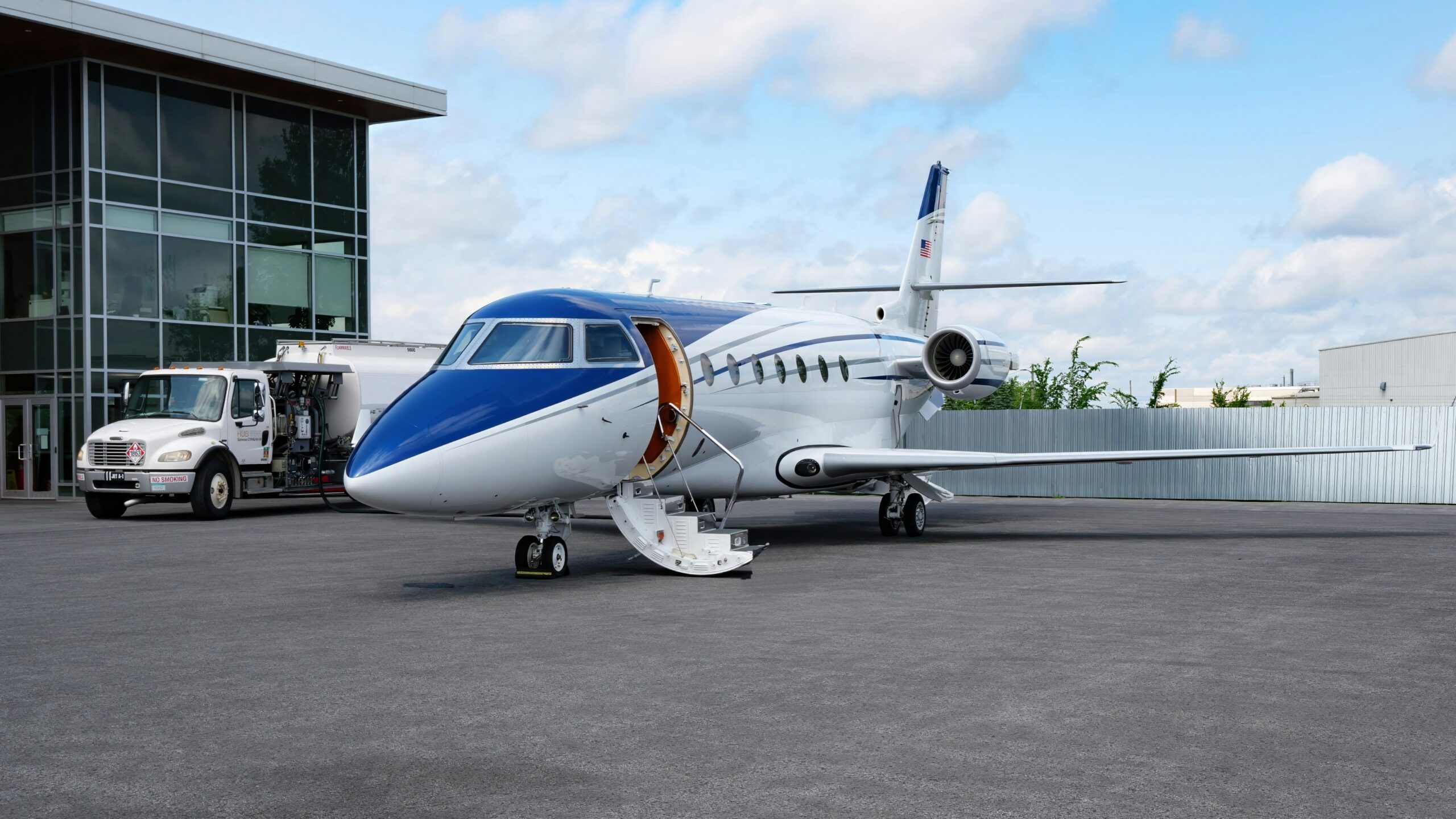
 If you are planning private jet travel from the UK in the second half of 2026, the SAF consultation is worth watching now. It is not a private jet ban, and it is not a new passenger tax. It is about how sustainable aviation fuel is recognised under the UK Emissions Trading Scheme, which could affect operator behaviour, fuel choices, reporting and future charter costs.
For clients, the practical message is simple. If you want to charter a private aircraft with a lower-carbon travel plan, you should start asking better questions about SAF availability, aircraft suitability, routing and documentation before you book.
What is SAF and why does it matter?
Sustainable aviation fuel, often shortened to SAF, is an alternative to conventional jet fuel. It can be made from approved feedstocks such as used cooking oil, waste materials, residues and low-carbon power sources, depending on the production pathway.
The important point is that SAF can usually be blended with conventional jet fuel and used in existing aircraft engines without needing a new aircraft. That makes it more realistic for private aviation than waiting for electric or hydrogen aircraft to solve longer-range travel.
But SAF is not a perfect answer. Availability is still uneven. It can cost more than conventional jet fuel. It also needs credible sustainability criteria and proper documentation, otherwise the environmental claims become too easy to overstate.
Aircraft Charter has already explored the rise of sustainable aviation fuel and why it is becoming part of private aviation planning. The 2026 consultation simply makes that conversation more important.
What is the UK consultation actually about?
The consultation is focused on how SAF should be treated under the UK Emissions Trading Scheme, known as the UK ETS. In simple terms, the UK ETS puts a carbon cost on certain aviation emissions. If SAF is recognised more clearly and consistently within that system, operators may have a stronger reason to use eligible SAF where it is available.
The consultation asks whether the rules should expand the types of SAF eligible for emissions reduction claims, whether UK ETS rules should align more closely with the UK SAF Mandate, and how SAF should be accounted for when calculating emissions.
That sounds technical, but it matters. If the accounting rules become clearer, it may be easier for operators, brokers and clients to understand what SAF use actually means for a flight. That should help serious providers stand apart from vague sustainability claims.
For background, Aircraft Charter’s article on what the June SAF consultation could mean for private jet charter costs and greener travel choices gives useful context.
How this could affect private jet travellers
You are unlikely to see an overnight change in private jet booking because of the consultation alone. The bigger shift is more gradual.
You may see more questions around fuel sourcing, emissions reporting and whether SAF is physically available at the departure airport. You may also see clearer optional pricing for SAF, book-and-claim arrangements or carbon reporting documents after a flight.
| What may change | What it means for you |
|---|---|
| Clearer SAF accounting | You can ask for more meaningful emissions information |
| More pressure on operators | SAF may become a more regular part of charter discussions |
| Higher demand for eligible SAF | Availability and price may vary by airport and route |
| More detailed documents | You may receive clearer post-flight sustainability records |
| Greater scrutiny of claims | Vague “green flight” wording may become less acceptable |
This is not about making every private jet flight “green”. That would be too neat. It is about making better choices where possible and being honest about the limits.
Why the second half of 2026 matters
The second half of 2026 is a useful planning window because the UK already has a SAF Mandate in place. The mandate started in 2025 and requires fuel suppliers to provide an increasing proportion of SAF in the UK aviation fuel mix over time.
That does not mean every private jet can uplift SAF at every airport today. Supply, infrastructure and pricing still vary. However, the direction of travel is clear. SAF is moving from a future promise into a live planning factor.
If you are arranging business travel, family office travel or regular UK departures, it is sensible to include SAF questions in your normal charter brief. You might not choose SAF every time, but you should know whether it is available and what the cost difference looks like in £.
Route planning will matter more than slogans
The most useful greener travel decisions are often practical rather than dramatic. Choosing the right aircraft, avoiding unnecessary repositioning, using sensible airports and grouping passengers properly can all matter.
If you plan to charter a private jet to Los Angeles, the aircraft choice, passenger load and route efficiency will have a bigger effect than a vague promise about sustainability. The same applies if you want to charter a private aircraft to Dubai, charter a private jet to New York or charter a private jet to Miami.
For shorter leisure and business routes, the conversation is slightly different. If you want to charter a private jet to Nice or charter a private jet to Mallorca, you may have more flexibility around airports, timings and aircraft type. Those choices can affect both cost and impact.
For longer or more complex routes such as charter a private jet to Cape Town, charter a private jet to Chicago or charter a private jet to Las Vegas, the aircraft needs to match the mission properly. Under-specifying can create operational problems. Over-specifying can increase cost and fuel burn.
What should you ask before booking?
You do not need to understand every technical detail of fuel policy. You do need to ask the right practical questions.
- Ask whether SAF is available for your departure airport.
- Ask whether SAF can be physically uplifted for your flight.
- Ask whether a book-and-claim option is available if physical SAF is not possible.
- Ask how the SAF claim is documented.
- Ask whether the aircraft is properly sized for your route and passengers.
- Ask whether another airport would reduce positioning or transfer time.
- Ask whether the quote separates SAF, taxes, fuel and other costs clearly.
Aircraft Charter’s guide to choosing a more sustainable private jet provider is useful here because it focuses on practical checks rather than easy claims.
Aircraft choice still comes first
SAF matters, but the aircraft still needs to be right. A larger aircraft may be necessary for range, baggage, cabin space or passenger comfort. But it should not be chosen simply because it looks more impressive.
If you are flying a short European route with 3 passengers, a smaller aircraft may be more appropriate than a large cabin jet. For long-haul flights, large private jet options or ultra long range jets may be necessary.
The wider list of aircraft options can help you compare cabin size, range and suitability before you commit. You may also want to review private jet rental options if you are still deciding between aircraft types.
Cost will remain part of the conversation
Greener choices can affect price. SAF can be more expensive than conventional jet fuel, and availability can vary by airport. That does not mean you should ignore it. It means you should ask for a clear explanation before approving the quote.
If the difference is modest on one route, it may be a sensible addition. If it is substantial, you may decide to focus on aircraft sizing, route efficiency and credible offsetting instead. The key is to make a conscious decision rather than accepting a vague “sustainable” label.
For wider pricing context, read a guide to private jet charter costs and Aircraft Charter’s article on higher APD and fuel volatility. They show why fuel, tax, demand and aircraft availability all need to be considered together.
Do not forget operational efficiency
A greener charter plan is not only about the fuel in the tank. It is also about the way the journey is built.
Better flight planning can reduce unnecessary fuel use. Aircraft Charter has covered how flight planning software helps reduce fuel use and how AI-powered flight routing can support smarter route decisions.
You can also look at empty leg private jet flights if your schedule is flexible. Empty legs are not suitable for every trip, especially when you need firm timings, but they can sometimes make use of aircraft movements that would otherwise operate without passengers.
For teams, group air charter flights may reduce duplicated travel, poor connections and separate transfers. For short final sectors, helicopter charter may sometimes reduce long road journeys, although it should be used only where it genuinely improves the route.
What this means for greener private jet travel
The SAF consultation does not make private aviation impact-free. It does not remove the need to question whether the flight is necessary, whether the aircraft is suitable, and whether the route has been planned properly.
What it does do is push the market towards clearer rules, better reporting and more serious fuel conversations. For you, that means greener private jet travel in late 2026 is likely to be less about slogans and more about evidence.
Ask better questions. Compare aircraft properly. Be realistic about cost. Request clear documentation. If sustainability matters to your business, family office or personal travel plans, make it part of the brief from the start.
Aircraft Charter can help you compare routes, aircraft, SAF options and wider travel arrangements before you book. Speak to the team early if you are planning UK departures in the second half of 2026 and want a clearer, more responsible way to fly.
FAQs
What is the UK SAF consultation about?
The consultation is about how sustainable aviation fuel should be treated under the UK Emissions Trading Scheme. It looks at how SAF use should be recognised, whether eligibility rules should change and how emissions reductions should be accounted for.
Does the SAF consultation affect private jets?
Yes, indirectly. It does not create an immediate ban or direct passenger tax, but it could influence how operators report SAF use, how they account for emissions and how greener charter options are presented to clients.
Can private jets use sustainable aviation fuel?
Many private jets can use approved SAF blends because SAF is designed to work with existing aircraft and engines. The bigger question is whether SAF is available at the airport, whether it can be physically uplifted and how the use is documented.
Is SAF cheaper than normal jet fuel?
Usually, SAF is more expensive than conventional jet fuel because supply is still limited and production is developing. Prices can vary by supplier, airport and route, so you should ask for a clear breakdown in £ before booking.
Is SAF enough to make private flying sustainable?
No. SAF can reduce lifecycle emissions, but it does not make private flying impact-free. A more responsible plan should also consider aircraft size, route efficiency, passenger numbers, empty sectors, airport choice and transparent reporting.