

Discover how to hire a private jet with ease. Learn essential tips on booking, choosing the right aircraft, and enjoying a seamless, luxury travel experience.

Hiring a private jet can make a complicated journey much easier, but the quality of the experience depends on the decisions you make before departure. Your route, passenger numbers, luggage, airport choice and timings can all affect availability, comfort and price.
A good charter should feel straightforward. You share your journey details, review suitable options and receive clear information about what is included. The aim is to arrange a flight that suits your schedule without paying for capacity you do not need.
Whether you are travelling for business, a family holiday or an important event, this guide explains how to approach Affrètement de jet privé with confidence.
The easiest way to receive accurate options is to provide a complete brief from the beginning. A vague request may produce a quick estimate, but the recommendation and price can change once the details are known.
Before asking for a quote, confirm:
Route: Include your preferred departure point, destination and any stops.
Dates: Give exact dates and explain whether you have flexibility.
Times: State when you need to depart or arrive.
Passengers: Include every adult, child and infant.
Luggage: Describe the number and type of bags.
Preferences: Mention catering, Wi-Fi, accessibility, pets and transfers.
Purpose: Explain whether the flight is for business, leisure or a group movement.
Small details can make a large difference. For example, 6 passengers with hand luggage may fit comfortably in one aircraft, while the same group carrying golf clubs or production equipment may need a larger baggage hold.
Le private jet rental service can help you plan the complete journey rather than selecting an aircraft in isolation.
Private aircraft vary in range, cabin size, baggage space and operating cost. A well-known model is not automatically suitable for your trip.
The most practical option is often the smallest aircraft that can complete the route comfortably with your passengers and luggage. A larger category provides more space, but usually costs more.
Le full aircraft selection provides an overview of the available categories. Your charter broker should then narrow the options according to your actual journey.
A basic understanding of aircraft sizes makes it easier to compare quotes.
Turbopropulseurs
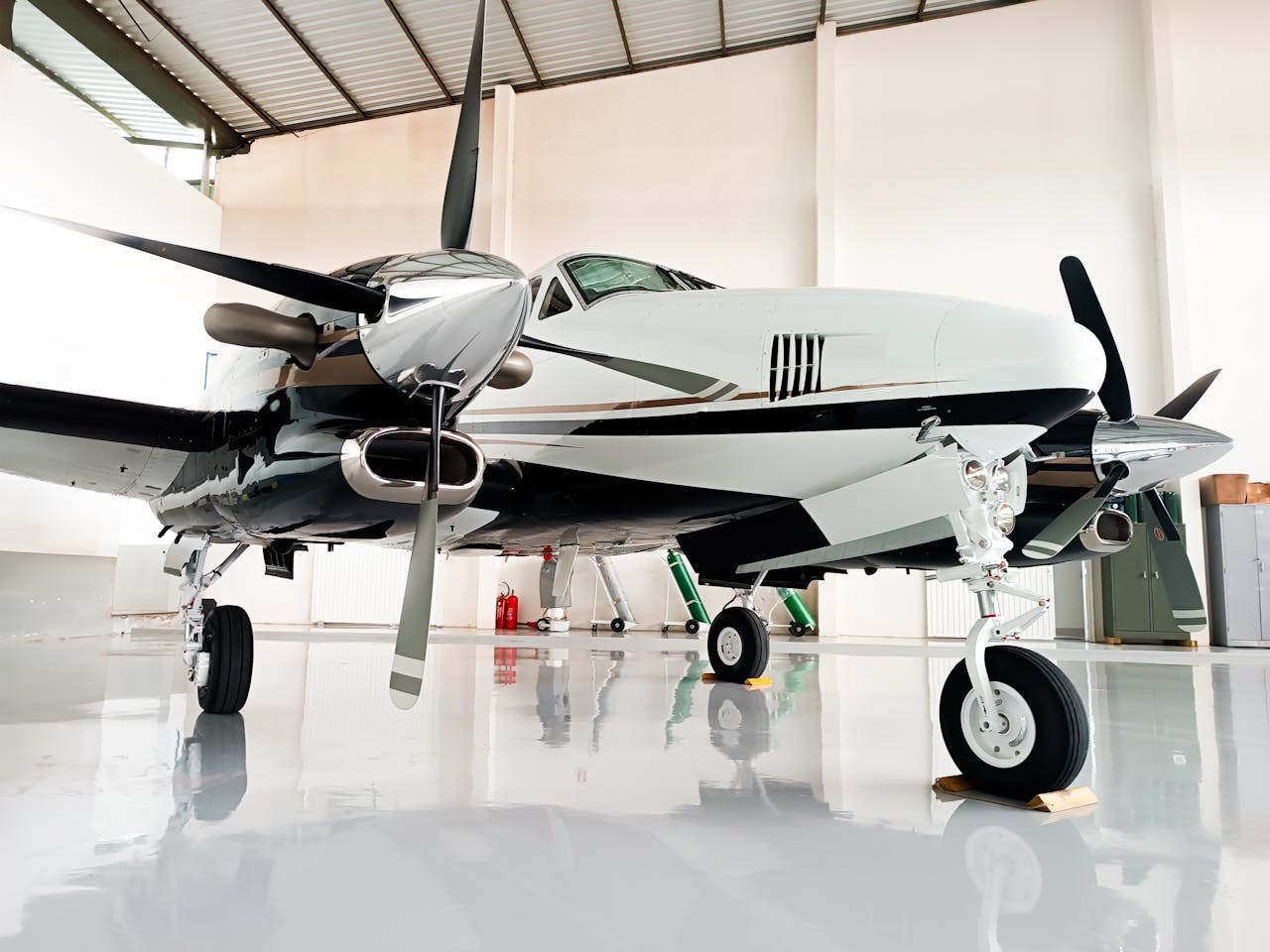
Turboprop aircraft can be practical for shorter journeys, regional routes and airports with restrictive runways. They are slower than jets, but may provide useful access.
Very light jets
Very light jets suit smaller passenger groups and shorter sectors. They provide jet travel without the cost of a larger cabin.
Light jets
Light jets work well for many short and medium-distance journeys. They balance speed, comfort and cost, although baggage capacity needs checking.
Midsize jets
Midsize jets normally provide more cabin room, range and baggage space. They suit journeys where a smaller aircraft would be near its practical limits.
Super-midsize jets
Super-midsize jets are designed for longer sectors and more demanding itineraries. They may offer standing cabin height and more room to work or rest.
Large and long-range jets
Large private jets offer more room for passengers to work, dine or sleep. For extended international flights, avions long-courriers can reduce the need for fuel stops and provide facilities suited to longer periods on board.
The category is only a starting point. Aircraft in the same class can have different layouts, baggage holds and facilities. Ask to see the proposed specification before confirming.
Passenger capacity figures can be misleading without context. An aircraft may be approved for a certain number of passengers, but the maximum layout may not be comfortable for a long journey.
Think about how you will use the cabin. You may need working space, lie-flat seating or room for children.
Luggage is equally important. Soft bags may fit where rigid cases cannot. Tell your broker about oversized items such as:
Golf clubs: Confirm the number of bags and hard cases.
Skis: Provide the length of ski bags.
Instruments: Give dimensions and say whether they must remain in the cabin.
Equipment: List sales cases, garment bags or production kit.
Mobility aids: Share the size and weight of wheelchairs.
Pushchairs: Confirm whether they fold.
Do not assume that empty seats mean extra baggage space. Seating and luggage storage are separate considerations.
A quote should be reviewed as a complete journey cost, not simply as an hourly rate. Two options can look similar but include different assumptions.
Le private jet charter cost guide explains the elements that may affect pricing. These can include positioning, flight time, airport charges, crew expenses, taxes and optional services.
When comparing quotes, ask:
Inclusions: Does the price include expected flight and airport costs?
Impôts : Are VAT or other applicable taxes shown clearly?
Positioning: Is the aircraft travelling empty before or after your flight?
Minimums: Does the operator apply minimum daily flying time?
Crew: Are overnight or extended-duty costs included?
Catering: What is included and what counts as an upgrade?
Transfers: Are cars or helicopters charged separately?
Changes: What happens if you alter the time, route or passenger list?
Cancellation: What charges apply if the trip is postponed?
The lowest quote is not always the best value. A cheaper aircraft may need a fuel stop or use an airport farther from your destination.
An empty leg is created when an aircraft needs to reposition for another booking. It may cost less than a standard on-demand charter, but the route and schedule are linked to the main flight.
Empty-leg flights can work when your plans are flexible. They are less suitable when you must arrive at a fixed time.
Before booking, ask what happens if the main charter changes. The flight may move, be cancelled or require a replacement aircraft at a different price. Treat an empty leg as an opportunity, not a guaranteed substitute for a flexible charter.
Private aviation gives you access to a wider range of airports, but the closest one on a map is not always the best operational choice.
Consider:
Opening hours: Some airports restrict arrivals and departures.
Runway suitability: Aircraft performance can limit your options.
Customs: International flights may require customs and immigration facilities.
Slots: Busy airports may need advance approval.
Parking: Limited parking can create additional positioning costs.
Transfers: A more distant airport may offer a faster road connection.
Handling: Private terminal facilities and service levels vary.
Review the private jet destinations, then ask your broker to compare the total door-to-door journey.
For city centres, islands or remote locations, an air taxi service ou Affrètement d’hélicoptère may be useful as part of the wider itinerary.
Obtenez instantanément un devis en temps réel en cliquant sur le bouton ‘ Obtenir un devis en temps réel ’ et en remplissant le formulaire. L'un de nos conseillers vous contactera pour discuter de vos besoins en matière d'affrètement d'avion.
You should know who will operate the aircraft. A charter broker may arrange the flight, but the licensed air carrier retains operational control.
Ask for the operator’s name and confirmation that the flight will be conducted commercially under the relevant aviation rules. A professional provider should explain its safety checks.
Important areas include:
Operator: Confirm that the carrier holds the appropriate commercial approvals.
Aircraft: Ask about maintenance, configuration and condition.
Crew: Check that the pilots meet the operator’s training requirements.
Insurance: Request evidence of suitable aviation insurance where necessary.
Audits: Ask whether independent safety information is available.
Back-up: Understand what happens if the original aircraft is unavailable.
Be cautious if the operator is unclear or paperwork is incomplete. A polished cabin does not replace commercial oversight.
A flight for 2 executives has different requirements from a movement involving 40 passengers. Business travellers may prioritise confidentiality, Wi-Fi, arrival timing and the ability to visit several locations in one day.
A location de jet d'affaires can be planned around meetings, site visits and roadshows. Provide the full schedule so that aircraft positioning and crew duty limits can be considered early.
Larger parties may be better served by group air charter. Sports teams, delegates and crews may need coordinated check-in, baggage handling or ground transport.
Submit accurate passenger numbers as early as possible. Even a small change can affect the aircraft, handling arrangements and final cost.
Private flying can make travelling with animals easier, but arrangements depend on the aircraft, operator and destination rules. A pet-friendly jet charter should be discussed well before departure.
Provide the species, breed, size and weight of each animal. Check vaccination, microchip, documentation and import requirements for the destination.
Also mention dietary requirements, reduced mobility, medical equipment or infants. Early notice helps the operator confirm what can be accommodated.
Read the charter agreement rather than relying only on the summary email. It should identify the route, dates, aircraft, passenger details, price and payment schedule.
Pay particular attention to:
Substitution: Can the aircraft be replaced and what standard must the replacement meet?
Delays: How are weather, air traffic control and technical delays handled?
Diversions: Who pays additional costs if the flight diverts?
Cancellations: Does the fee increase as departure approaches?
Passenger changes: Is there a deadline for names and passport details?
Restrictions: Are smoking, pets or particular items prohibited?
Refunds: When would you receive a refund or credit?
Ask for clarification before signing. A reliable charter team should explain the wording in plain language.
Private terminals simplify departure, but you still need the correct documents and arrival time.
Before leaving:
Documents: Check passports, visas and entry authorisations.
Names: Make sure passenger details match travel documents.
Timing: Follow the arrival time stated in your itinerary.
Address: Confirm the exact private terminal location.
Baggage: Stay within the agreed number, size and weight.
Contacts: Save the charter team’s operational number.
Changes: Report delays or passenger changes immediately.
Do not travel to the main airline terminal unless your itinerary tells you to do so. Large airports can have several private aviation facilities in different locations.
Nominate one person to approve aircraft options, passenger changes and extra costs. This is particularly useful for corporate and family bookings involving several decision-makers.
Ask for a final itinerary containing the aircraft, operator, terminal addresses, times, passenger list and arrangements. Review it promptly.
If weather or operational circumstances change, respond promptly. A practical alternative airport or revised departure time can often protect the wider journey.
Flights can be arranged at short notice, but earlier booking normally provides more choice and time to organise permits, catering and transfers. Book early for major events, school holidays and routes with limited availability.
You may be offered a specific aircraft or a category. A named aircraft gives you more certainty about the cabin, but substitutions can still happen for operational reasons. Check what replacement standard applies before signing.
You can request a change, but it depends on airport opening hours, slots, crew duty limits and the aircraft’s next commitment. The change may also create an additional charge.
The operator and broker should assess replacement options. The speed of the solution depends on aircraft availability, timing and location. Ask about the back-up process before booking a time-sensitive journey.
Hiring a private jet should remove complications rather than create new ones. Start with a detailed brief, choose the aircraft around the journey and compare complete prices. Check the operator, understand the contract and confirm every practical detail before departure.
Faites l'expérience d'un voyage sans souci avec affrètement d'avion. Commencez par charters sur mesure, profitez d'une exclusivité Affrètement de jet privé, voyage d'affaires en avion, plan affrètement de jets privés pour les groupes, ou se fier à services d'affrètement d'avions-cargos.
Faites de belles économies avec vols en jet privé à vide. Trouvez un vol, réservez vite services de taxi aérien, sécurisé services d'affrètement d'hélicoptères, découvrez en exclusivité Destinations, ou se fier à services d'évacuation sanitaire par voie aérienne.

Private jet travelers attending the British Grand Prix at Silverstone have several high-end airport options nearby, each offering exclusive VIP facilities for a seamless and luxurious experience.
London Oxford Airport (OXF) is just 30 miles from Silverstone and a top choice for private flyers. Its modern VIP terminal includes luxury lounges, fast-track customs, private meeting rooms, and on-demand helicopter transfers directly to the circuit. The airport specializes in handling private aviation traffic for major events, offering a smooth and discreet arrival.
Cranfield Airport (EGTC) is even closer—only 25 miles from the track—and caters exclusively to general aviation. With a private jet terminal, low traffic levels, and full concierge services, it ensures quick turnarounds and ground transfers to Silverstone within 40 minutes.
Birmingham Airport (BHX), located about 55 miles away, offers international FBOs like Signature Flight Support, providing VIP lounges, 24/7 customs and immigration, catering, and luxury ground transportation coordination.
For those based in London, Aéroport de Farnborough (FAB) et Luton Airport (LTN) both offer world-class FBO services, private suites, and helicopter transfer options to Silverstone.
Each of these airports ensures privacy, comfort, and efficiency—making them ideal for high-profile guests and motorsport enthusiasts flying in for race weekend.