
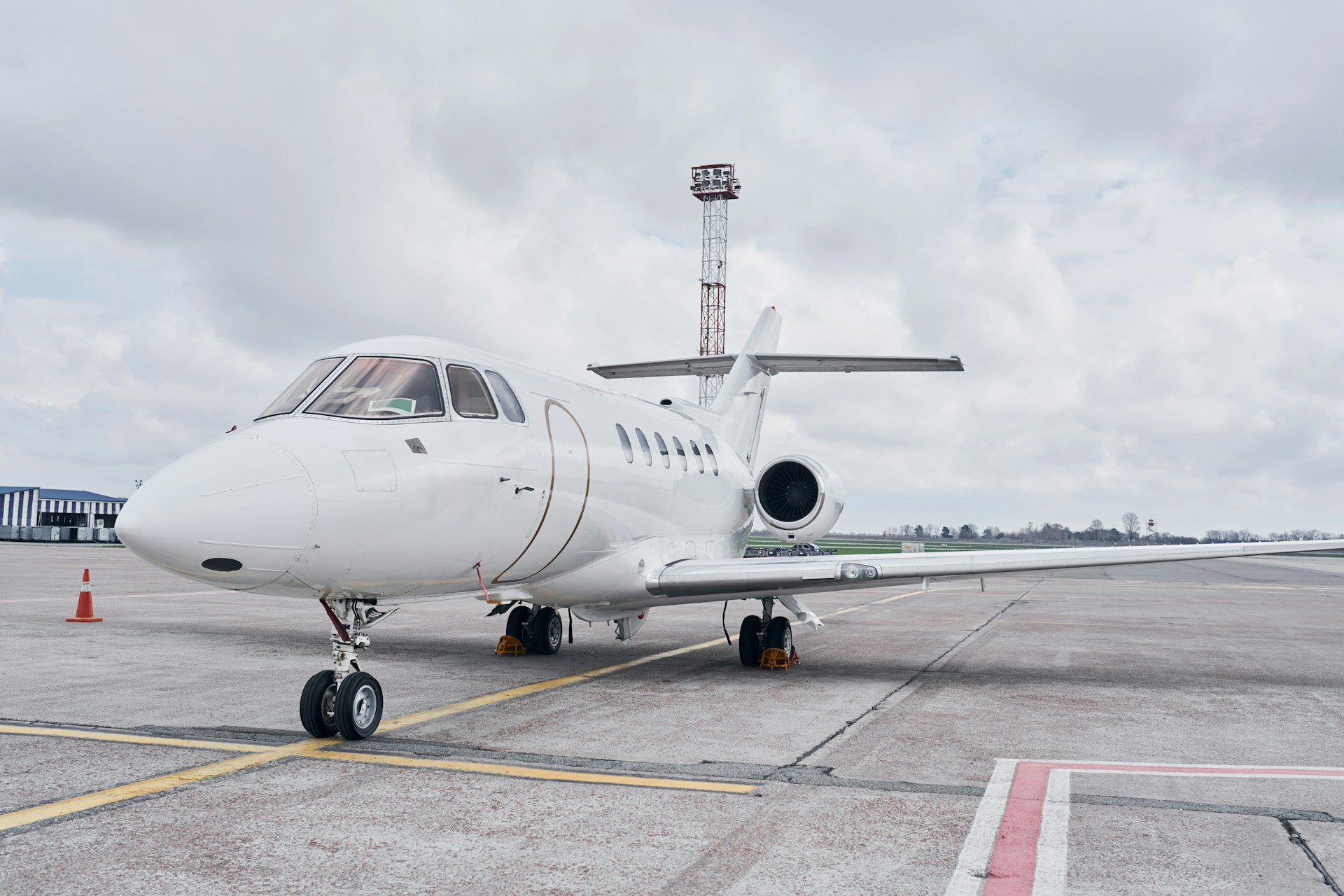
European heatwaves and wildfires: what private flyers should check before southern Europe trips
Before flying privately to southern Europe this summer, check the forecast temperature at both airports, current NOTAMs and wildfire restrictions, and the aircraft’s performance at the expected temperature. Western Europe recorded its hottest June on record in 2026, with temperatures exceeding 40°C in France and Spain. By 20 July, Copernicus figures showed that 104,423 hectares had burned in Spain and 41,781 hectares in France. A well-planned private aircraft charter should keep monitoring weather, airport restrictions and aircraft performance until departure.
Why heat matters to aircraft performance
Hot air is less dense, reducing engine thrust, wing lift and climb performance. Depending on runway length, elevation, wind and aircraft type, this can increase takeoff distance or reduce the weight that can be carried safely. The practical response may be fewer bags, less fuel with a planned fuel stop, a different aircraft or a departure during cooler hours.
There is no single temperature limit for every business jet. The operator must use the aircraft flight manual, runway data and actual weather to calculate whether the flight can operate safely. Teams arranging a private jet charter from Houston deal with high-density-altitude planning regularly, but the same calculations matter at European airports during extreme heat.
Thunderstorms can cause wider disruption
Afternoon heat can contribute to thunderstorms, which force aircraft and air traffic control to reroute traffic or reduce capacity. During the week ending 21 June 2026, weather caused 47% of European en-route air traffic flow management delays, particularly in France and Germany.
Where practical, an early departure can provide cooler temperatures and more recovery time if disruption develops later. Charter also offers a more flexible solution when plans are disrupted, although aircraft, crew, airport slots and airspace restrictions still determine what changes are possible. Operators increasingly use forecasting and routing tools associated with eco-efficient flight operations.
Wildfires, smoke and airspace restrictions
Wildfires can reduce visibility, affect surface access and trigger temporary restricted airspace for firefighting aircraft. Before departure, confirm an alternate airport and check official NOTAMs, local civil-protection alerts and Foreign Office travel advice.
Island destinations may have fewer nearby alternates and road routes, so contingency planning matters. A helicopter transfer may help where roads are disrupted, similar to arrangements for events like the British Grand Prix, but only when local restrictions, landing permissions and fire operations allow it. Medevac and air ambulance services may also face operational limits during severe weather or restricted-airspace events.
A short pre-trip checklist
| Check | Why it matters |
|---|---|
| Forecast temperature at both airports | Affects runway performance, payload and departure timing |
| Aircraft performance calculations | Confirms the safe passenger, baggage and fuel load |
| Wildfire NOTAMs and restrictions | Identifies closed airspace, airports or firefighting activity |
| Alternate airport | Provides a practical diversion option |
| Travel advice and local alerts | Identifies wildfire warnings, closures and evacuation instructions |
| Schedule buffer | Reduces the impact of storms, congestion and ground delays |
Plan the whole journey
For transatlantic arrivals, a private jet charter from Boston should include suitable alternates and realistic ground arrangements. A Affrètement de groupe can keep families, teams or business groups on one coordinated itinerary.
For short positioning sectors, air taxi services in the UK may support an earlier departure from a suitable airport. Flexible travelers may also consider an empty leg flight, although timing and routing are fixed by the aircraft’s existing schedule.
The UK’s 35.1°C reading at Kew Gardens on 26 May 2026 set a new national record for May, showing that exceptional heat is not limited to July and August. Speak to Aircraft Charter early so the team can match the aircraft, schedule and contingency plan to current conditions.
